Kohli's Form Alone Won't Win India the 2027 World Cup
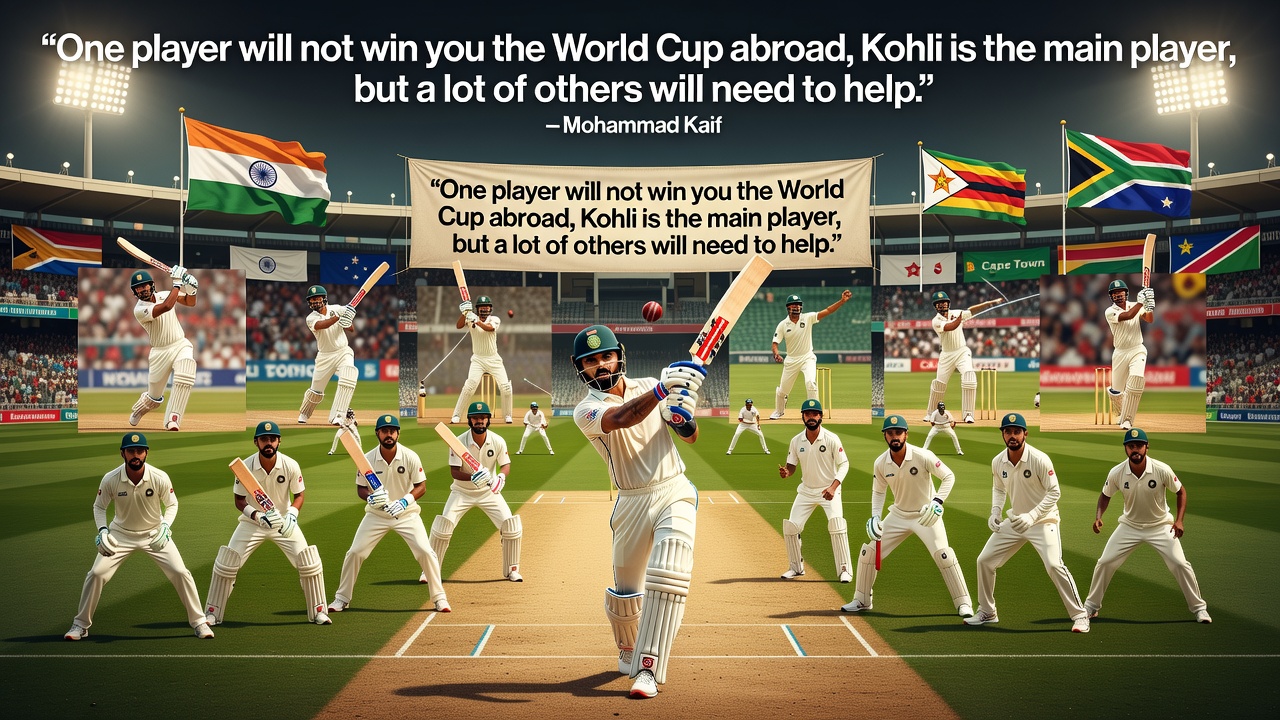
Virat Kohli continues to churn out centuries and remains India's most reliable one-day batter, but former international Mohammad Kaif has sounded a note of caution ahead of the 2027 ODI World Cup. Co-hosted by South Africa, Zimbabwe and Namibia in October-November, the tournament will demand collective batting strength from India, not dependence on a single star, Kaif argues.
A Squad Loaded With Batting Depth
India's batting resources look as strong as they have in years. Alongside Rohit Sharma and Kohli, the pool includes Shubman Gill, Shreyas Iyer, KL Rahul and Ishan Kishan, giving the team multiple options across the top and middle order. All-rounders Hardik Pandya, Ravindra Jadeja and the emerging Nitish Reddy add balance and depth lower down, while Yashasvi Jaiswal and Ruturaj Gaikwad provide credible back-up should injuries or form dips force changes. On paper, few teams can match that volume of batting talent heading into a global tournament hosted on South African pitches, which have traditionally rewarded pace and bounce.
Bowling Remains the Bigger Concern
The same confidence does not extend to the bowling attack. India's pace options lack proven depth beyond Jasprit Bumrah, who remains the only seamer guaranteed a starting place regardless of conditions or opposition. That imbalance could prove costly in South Africa, where fast bowling typically plays a decisive role. Building a reliable second and third pace option before 2027 is likely to be one of the team management's central priorities over the next two years.
Lessons From 2003
Kaif, who was part of India's 2003 World Cup squad that reached the final for the first time since 1983, believes the current team can learn from that campaign's blueprint. "One player will not win you the World Cup abroad, Kohli is the main player, but a lot of others will need to help," Kaif told Hindustan Times. He pointed to Sachin Tendulkar's dominant tournament in 2003 - 673 runs from 11 innings, the most by any batter - as the headline act in a team effort that went far deeper. Sourav Ganguly added 465 runs, Rahul Dravid scored 318 at an average of 63.60, and Virender Sehwag contributed 299.
The bowling unit mattered just as much. Zaheer Khan finished as the tournament's fourth-highest wicket-taker with 18 scalps, while Javagal Srinath (16) and Ashish Nehra (15) were not far behind. "Tendulkar was our main batter, but if you check the matches, others also contributed. Yuvraj got important runs, I got an unbeaten half-century against New Zealand, Rahul Dravid's runs were there, Virender Sehwag's runs, Ashish Nehra's match-winning spell against England, Zaheer Khan bowled good spells, Javagal Srinath was our senior bowler. Ganguly's captaincy was excellent, a lot of credit goes to him," Kaif said.
The Road Ahead
With roughly two years remaining before the tournament gets underway, India's selectors and team management have time to address the bowling gaps and settle on a core batting order. Kaif's comments serve as a reminder that individual brilliance, however consistent, has rarely been enough to win a World Cup on foreign soil. The 2003 campaign fell short in the final against Australia, but it demonstrated that shared contribution across the XI, not reliance on one player, is what takes a team deep into the knockout stages.